

The Climate Action Standing Committee (CASC) is proud to present The Changing Climate of Work, a two-part webinar series examining how climate change and green transitions are reshaping jobs, politics, and education. Bringing together experts in labour, policy, and green economics, the series explores both opportunities and challenges for workers and communities in the context of a changing climate and shifting economic baseline.
The Changing Climate of Work: Political, Economic and Social Challenges for a Green Transition
Wednesday, March 11, 2026
2:00 p.m. – 3:00 p.m. Pacific Time
Please click here to register.
This webinar investigates how shifting politics, economic restructuring, and social inequality shape the possibilities for a green transition. Speakers will consider what it will take to align climate goals with decent work, strong communities, and space for inclusion.
Presenters
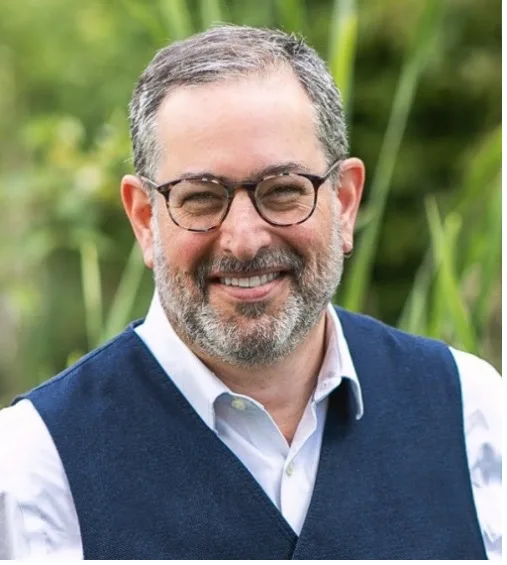
Seth Klein is a public policy researcher, writer and speaker based in Vancouver, BC. He served for five years (2021-2025) as founder, Team Lead and Director of Strategy of the Climate Emergency Unit. Prior to that, he served for 22 years as the founding director of the British Columbia office of the Canadian Centre for Policy Alternatives (CCPA), a social justice think tank. He is the author of A Good War: Mobilizing Canada for the Climate Emergency, a regular columnist with Canada’s National Observer, an adjunct professor with Simon Fraser University’s Urban Studies program, and serves on the board of the BC Society for Policy Solutions.
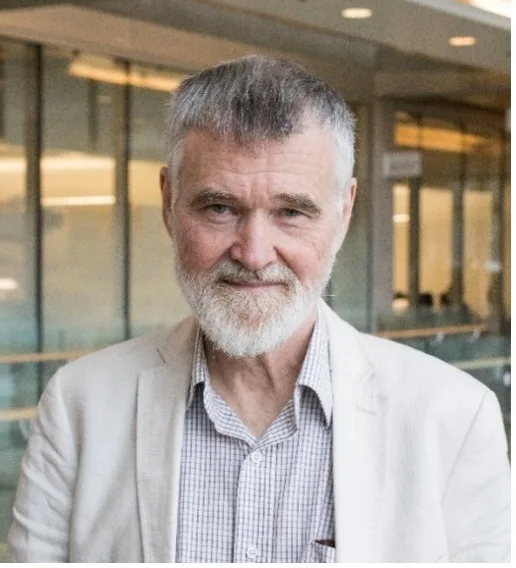
John Calvert is a recently retired Simon Fraser University Associate Professor. His academic training was at Western and the London School of Economics. In his early career he was a researcher for the Canadian Union of Public Employees. Subsequently, he spent almost a decade as a policy analyst in the BC government. Then he moved to SFU where he taught for 14 years.
He has written or co-written a number of books, including Government Limited, the Facts on Free Trade, Pandora’s Box and most recently 35 Accords: Reimagining British Columbia’s Public Sector Labour Relations with Tony Penikett. He has also written extensively for the Canadian Centre for Policy Alternatives on economic and environmental issues. His post-retirement work has involved developing climate literacy modules for use in Canada’s construction apprenticeship programs. He lives in Vancouver.
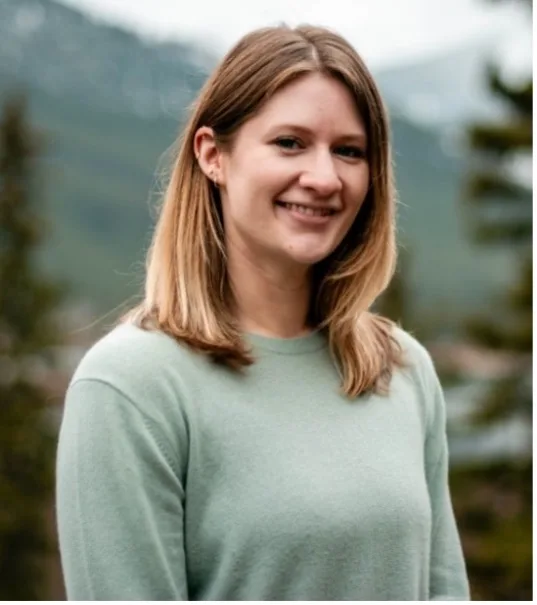
Megan Gordon, manager of the Pembina Institute’s Equitable Transition Program, focuses on the socio-economic dimensions of Canada’s clean energy transition. She works closely with labour and community partners to advance people-centered climate policy and serves on the board of Blue-Green Canada.
Previously, Megan worked at Environment and Climate Change Canada supporting workers and communities affected by the transition away from coal, and has advanced academic research on regional workforce transitions in the forest sector. She holds a Master of Natural Resources and Environmental Studies from the University of Northern British Columbia.
The Changing Climate of Work: Green Jobs, Skills, and Sector Transitions
Wednesday, April 15, 2026
2:00 p.m. – 3:00 p.m. Pacific Time
Please click here to register.
Focusing on concrete changes in workplaces and industries, this webinar explores how green transitions are transforming employment across sectors. Panelists will discuss emerging green jobs, evolving skill demands, and the roles of unions, employers, and educational institutions in supporting workers through rapid sector transitions.
Presenters
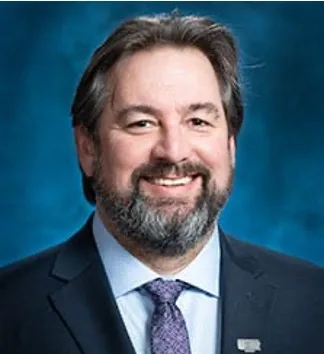
Scott Lunny is the Director of United Steelworkers District 3, representing USW members in Canada’s four Western provinces and three Northern territories. After earning a degree from the University of British Columbia, he began working for the Industrial, Wood and Allied Workers of Canada (IWA) in 1994, serving as a staff representative, researcher, communications officer, and senior policy advisor to the IWA president. Lunny was actively involved in the planning and implementation of the historic merger of the IWA in 2004. In November 2021, Lunny was elected by the membership to the position of District 3 Director. As Director, Scott has worked to build an inclusive District: expanding local union leadership meetings and education sessions; building up District-wide networks, committees and capacity for equity-deserving members; and actively supporting the union’s indigenous engagement project and coordinators. Lunny sits on the Provincial Executive of the British Columbia New Democratic Party (BC NDP), serves as a vice-president for the BC Federation of Labour and co-chairs the BCFL Climate Justice Job (CJJ) Standing Committee. He has also been active in Blue Green Canada and is working to establish a coalition of unions, environmental organizations and First Nations to advocate for green jobs and a clean industrial strategy for British Columbia.
Scott is also president of the nonprofit Union Protein Project, a union charity advocating for food security. Scott lives in Richmond, B.C., with Nina and their three sons, Aidan, Gavin and Owen.
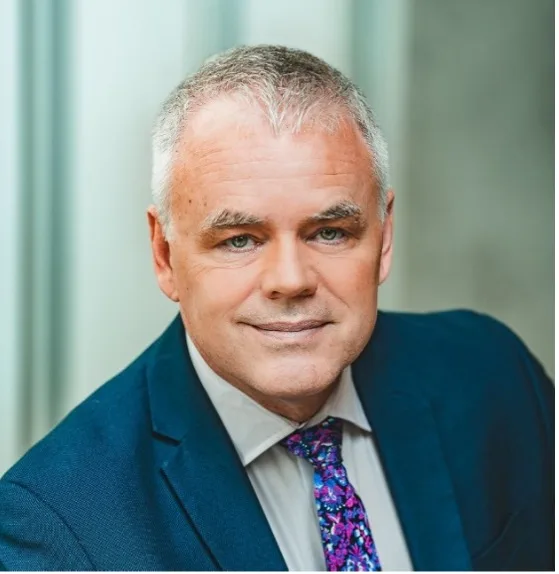
Jim Stanford is Economist and Director of the Centre for Future Work, a labour economics think tank based in Vancouver, B.C.
Jim is one of Canada’s best-known economists. He served for over 20 years as Economist and Director of Policy with Unifor, Canada’s largest private-sector trade union (formerly the Canadian Auto Workers). He is quoted frequently in the print and broadcast media and contributes a regular column to the Toronto Star. He is also the Harold Innis Industry Professor in Economics at McMaster University in Hamilton, Canada, Senior Fellow at the Robert L. Heilbroner Center for Capitalism Studies at the New School for Social Research in New York, and an Honorary Professor in the Department of Political Economy at the University of Sydney.
Jim received his Ph.D. in Economics from the New School for Social Research in New York. He also holds an M.Phil. in Economics from Cambridge University, and a B.A. (Hons.) in Economics from the University of Calgary.
Jim is the author of Economics for Everyone: A Short Guide to the Economics of Capitalism (second edition published by Pluto Books in 2015), which has been published in six languages.
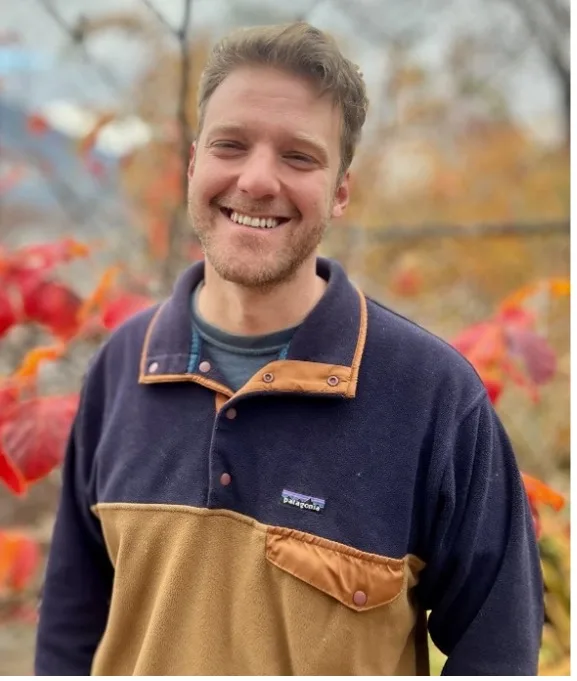
Ben Simoni is the Executive Director of Youth Climate Corps BC, where he leads projects that create paid employment opportunities for young people while advancing climate action and community resilience.
Before this, he received a Master’s in Environment and Management at Royal Roads University and was an outdoor leadership instructor for a decade, focusing on connection to place and leadership development for young adults.
He works closely with governments, Indigenous communities, and local partners to develop workforce programs that support climate adaptation, disaster preparedness, and environmental stewardship. Ben is passionate about building pathways for youth leadership in the “green” economy and strengthening collaboration between public, non-profit, and community sectors. His work focuses on scaling practical solutions that address climate challenges while creating inclusive economic opportunities for the next generation.
Ben enjoys spending his time hiking and skiing with his wife and daughter around his home in Nelson, BC on unceded Sinixt, Ktunaxa, and Syilx territories.
Host

Rosalind Warner is a political scientist and educator who lives and works on the ancestral and unceded lands of the Syilx Okanagan peoples in Kelowna, British Columbia. She is a co-author of the recent book Canadian Ecopolitics (University of Toronto Press). Rosalind teaches at Okanagan College.
Beyond the classroom, she serves in leadership roles with several national and international networks, including the Canadian Environmental Network (RCEN), the Federation of Post-Secondary Educators’ Climate Action Standing Committee (FPSE CASC), and the Earth System Governance Project, where she contributes to global research and policy dialogues on sustainability transformations. Rosalind brings to this panel a commitment to both scholarly activity and grassroots activism in conversations about climate and environmental futures.