

Presenters
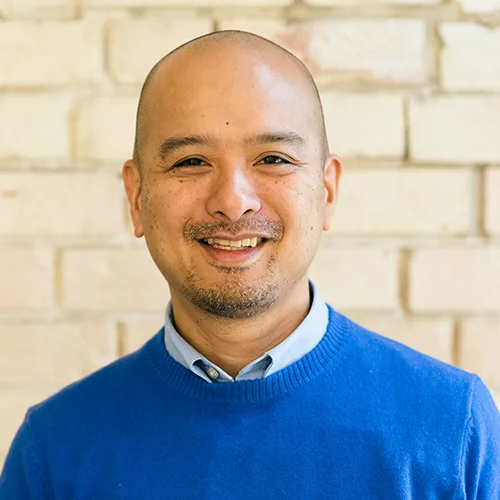
Dr. Jesmen Mendoza is a psychologist and President of the Toronto Metropolitan Faculty Association. He has provided representation and performed grievance handlings for faculty members. In his regular duties at the university, he also provides accountability counselling to students proceeding through sexual violence or student code of non-academic misconduct policies. He has a particular interest in providing consultation on disruptive behaviours, violence and aggression in the workplace and educational/campus settings, all within a trauma and violence informed lens.

Dr. Brenda Morrison is Simon Fraser University’s Director of the Research and Engagement Centre for Restorative Justice. She is passionate about interdisciplinary work that develops critical and reflective praxis that frames problems of crime and justice; public health and safety; education and development in ways that re-imagine and transform individuals, communities and governance. Her work in the field of restorative justice focuses on praxis within and between three institutional systems: justice; education and health.
Dr. Morrison is a theoretical social psychologist with research and field experience in outdoor education, governance, regulation and restorative justice. She has engaged in research in diverse areas: social identity, the self and self-interest, bullying and belonging. She serves on a range of working groups internationally, nationally, provincially and locally. A number of current projects and initiatives focus on re-imagining justice through the arts.

Meredith Rossner is Professor of Criminology and Lead of the Crime and Social Justice Programme at the POLIS: The Centre for Social Policy Research at the Research School of Social Sciences at the Australian National University. She co-directs the Centre for Restorative Justice at the ANU. Her research focuses on emotions, rituals, the built environment, and technology in justice practices. Past and current projects include investigations into the emotional dynamics of restorative justice, restorative justice practice inside and outside the criminal legal system, therapeutic courts, the role of courtroom design on access to justice, and the use of video and virtual technology in courts. Meredith has published widely in the field of restorative justice, including Just Emotions: Rituals of Restorative Justice (OUP, 2013). She is on the editorial board of the International Journal of Restorative Justice, a member of the Canberra Restorative Community and the Oceania Network of Restorative Practice for Sexual Harm.
Facilitator

Dr. Joanna Ashworth is a research associate with CERi, Community Engaged Research Initiative and the Faculty of Environment at Simon Fraser University where she facilitates an Indigenous-Centred Research Network as well as leads a number of programming initiatives. Joanna is the founder of SFU’s certificate program in Dialogue and Civic Engagement, past associate director and faculty in the Centre for Sustainable Development at SFU, and past director of Dialogue Programs at SFU’s Wosk Centre for Dialogue.